
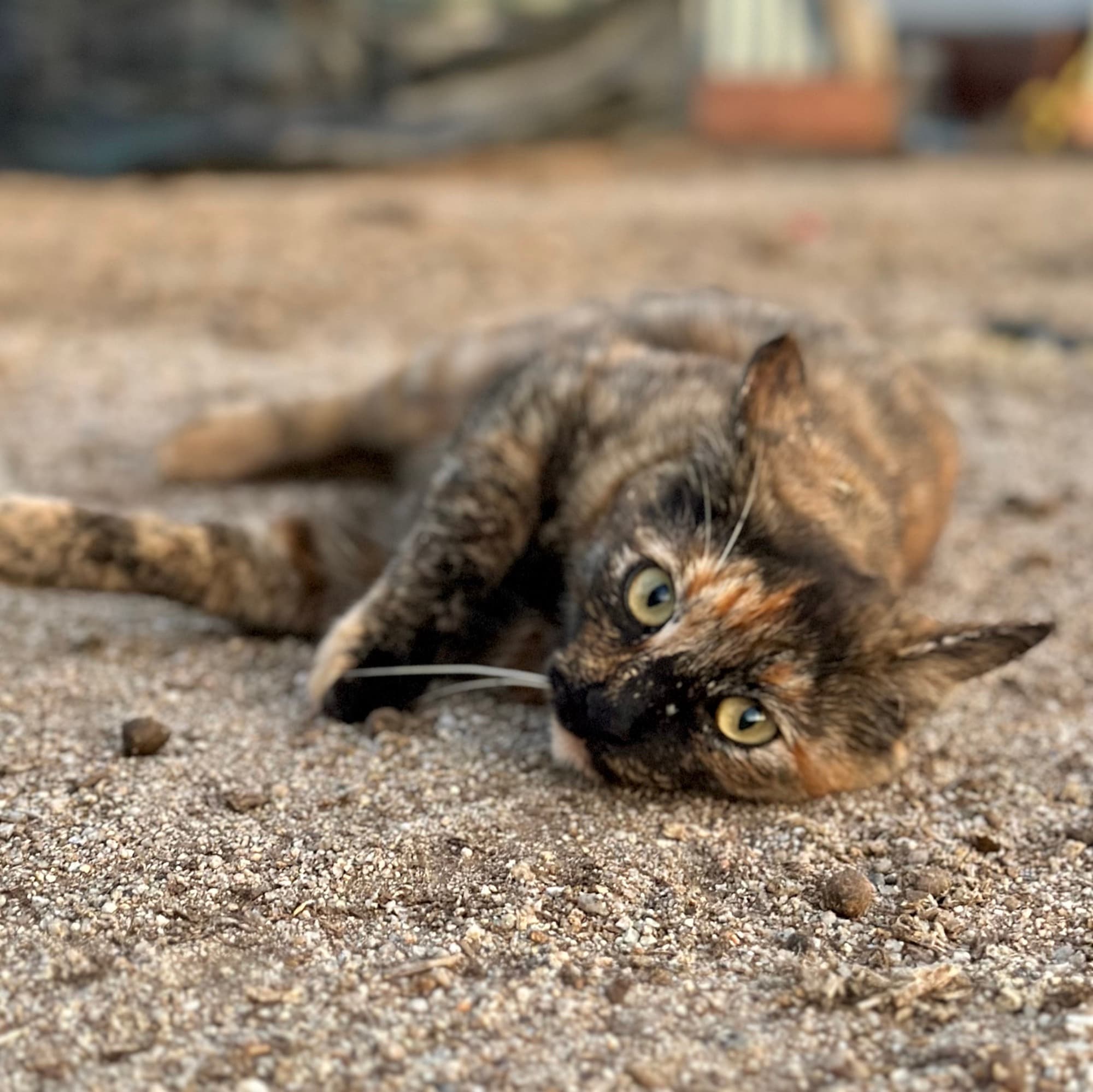
Feral-to-Barn-Cat
We took the first ones in because rodents were chewing on the pigs at night. Krystal set up a camera, found the cause, and built the Cattersville cat-house complex above the pig dens — named for the NOFX song Mattersville. The cats’ presence solved the problem.
That symbiosis is still the shape of the program. Today we intake ferals from municipal shelters in San Bernardino, Riverside, Los Angeles, and Orange counties — cats already on euthanasia timelines — and place them in groups at vetted properties across the Julian backcountry.
How Cattersville started
We started taking ferals because rodents were chewing on the pigs at night. Krystal set up a trail camera, caught the little thieves in the act, and built the Cattersville cat-house complex right above the pig dens — a deliberate play on the NOFX song Mattersville. The cats solved the problem overnight. No poison, no wasted donor dollars, just symbiosis: saved cats protecting saved pigs. We later added a second clouder in the feed shed when rodents started spoiling expensive feed. That same model is still how the whole program works today.
We place them as clouders — tight-knit little colonies that stay together.
How a cat moves through the program
We run a closed, six-step pipeline designed for safety, not show. Every cat comes to us through trusted regional spotters. Here’s the path:
- Spotters. Feline-advocacy groups identify true ferals on euthanasia timelines at local municipal shelters.
- Medical clearance at the source. Spay/neuter and vaccinations are completed before the cat ever leaves the shelter.
- Transport. Cats travel in small groups of three to ten with vetted transporters.
- Quarantine & observation. Krystal clears every cat for placement, or escalates to our farm vet if needed.
- Matching to a host. Cats are placed as clouders — never fewer than four, usually six — with hosts who already meet our criteria.
- Post-placement support. Krystal does an on-site visit, loans the acclimation crate, and checks in on a four-to-ten week schedule until everyone is settled.
Could you host?
Most of our hosts come to us through neighbors, the Julian-backcountry Facebook groups, or visits to the sanctuary. There is no application form. If you read the criteria below and the answer is yes, write to us and Krystal Lynn will follow up.
Hard requirements
- Property type. Barn, stable, hay shed, orchard, or large outbuilding with 24/7 access for the cats.
- No current outdoor cats with health risks the new cats could catch or be exposed to.
- Daily feeding commitment. Cats live as residents. Food and water are not negotiable.
- Long-term commitment. A multi-year commitment, ideally for the lifetime of the cats.
- Willingness to alert Steampunk if anything changes — a move, an illness, a predator attack, anything that affects the clouder.
- Predator-mitigation considerations. Julian backcountry has coyotes, raptors, and bobcats. Krystal Lynn assesses on the on-site visit.
- Geographic radius. Julian and the surrounding backcountry. Further afield is case-by-case.
Tell us about your property, your experience with outdoor cats, and what made you read this far.
We don’t run a dashboard
We don’t publish counts of cats placed or miles driven on this page. After a four-month harassment campaign cost us a major donor, we decided to let the work speak for itself instead of feeding the numbers game. What we do show: no salaries, an all-volunteer crew, hundreds of real photos every year on Facebook, and full financial transparency at /the-fine-print.
If you want to know more about how this program works in practice, follow us. Watch how we handle the things that come our way. The trust we earn is built on showing up, not on dashboards.