
Nature's Cool Tricks — How Sanctuary Animals Beat the Heat Without AC
From mud-wallowing pigs to horn-radiating goats, every animal at the sanctuary has a cooling strategy millions of years in the making. Here's what Xavier, Wendy, Eeyore, and the crew teach us about staying cool — sustainably.
The diverse cooling strategies of Earth's inhabitants offer valuable lessons for designing energy-efficient and sustainable cooling systems. By mimicking these natural adaptations, we can develop innovative ways to cool our homes and workplaces while reducing our environmental footprint. Imagine buildings with advanced insulation inspired by wool, cooling systems that utilize evaporative principles akin to sweating, and passive design elements that enhance natural ventilation.
At Steampunk Farms, we watch our residents deploy these strategies every summer — and we take notes.
Xavier the Alusky — A Cool Companion
In the shimmering heat of summer, Xavier, our spirited Alusky, knows just what to do. He's a descendant of the hardy dogs from the sub-arctic, where his ancestors would dig deep into the earth to find cool relief during humid summers and to seek warmth in the frigid winter storms.
On these scorching days, he engages his modern sensibilities — he finds his favorite spot in the hallway, strategically located where the air from the swamp cooler flows directly over him. It's his modern-day burrow, where the cool, circulating air keeps him comfortable. Xavier may be far from his ancestral lands, but his instincts guide him to stay cool and cozy, digging into a perfect spot to beat the heat.
Wendy the Goat — Horned Radiance
Wendy, with her majestic, curving horns, is a sight to behold. On a hot summer day, she uses her horns as natural radiators, dissipating heat to keep her body cool. Wendy finds a shaded spot under the sprawling branches of a deodara tree, her horns working efficiently to release the day's heat.
Wendy's horns are more than just beautiful — they are paramount to her resilience. She moves gracefully, finding cool spots and always ensuring she has plenty of water. Her horns glisten in the sunlight, reflecting the heat away from her body. Wendy's survival instincts are finely tuned, allowing her to thrive even in the intense heat. She stands proudly, embodying the spirit of endurance and adaptability.
Gomas the Chicken and Espy the Turkey — Feathered Friends
Gomas the chicken and Espy the turkey are inseparable companions, each with their unique ways of staying cool. Gomas, with his fluffy feathers, looks like he's always ready for a photo shoot, but those feathers are his secret weapon. They trap a layer of cool air close to his skin, acting like a natural air conditioner. On hot days, Gomas stretches his wings, letting the breeze flow through, cooling him down.
Espy, on the other hand, uses the bare skin on his neck and legs to release heat. He stands tall, allowing the wind to sweep across his exposed skin, dissipating the heat. Together, Gomas and Espy find shade and take dust baths, cooling their bodies and keeping parasites at bay. They share their secrets of staying cool, each method a blend of instinct and nature's design — except on the hottest days, when they burrow into their spot between the swamper's air and the big glass door.
Eeyore the Pot Belly Pig — Mud Bath Master
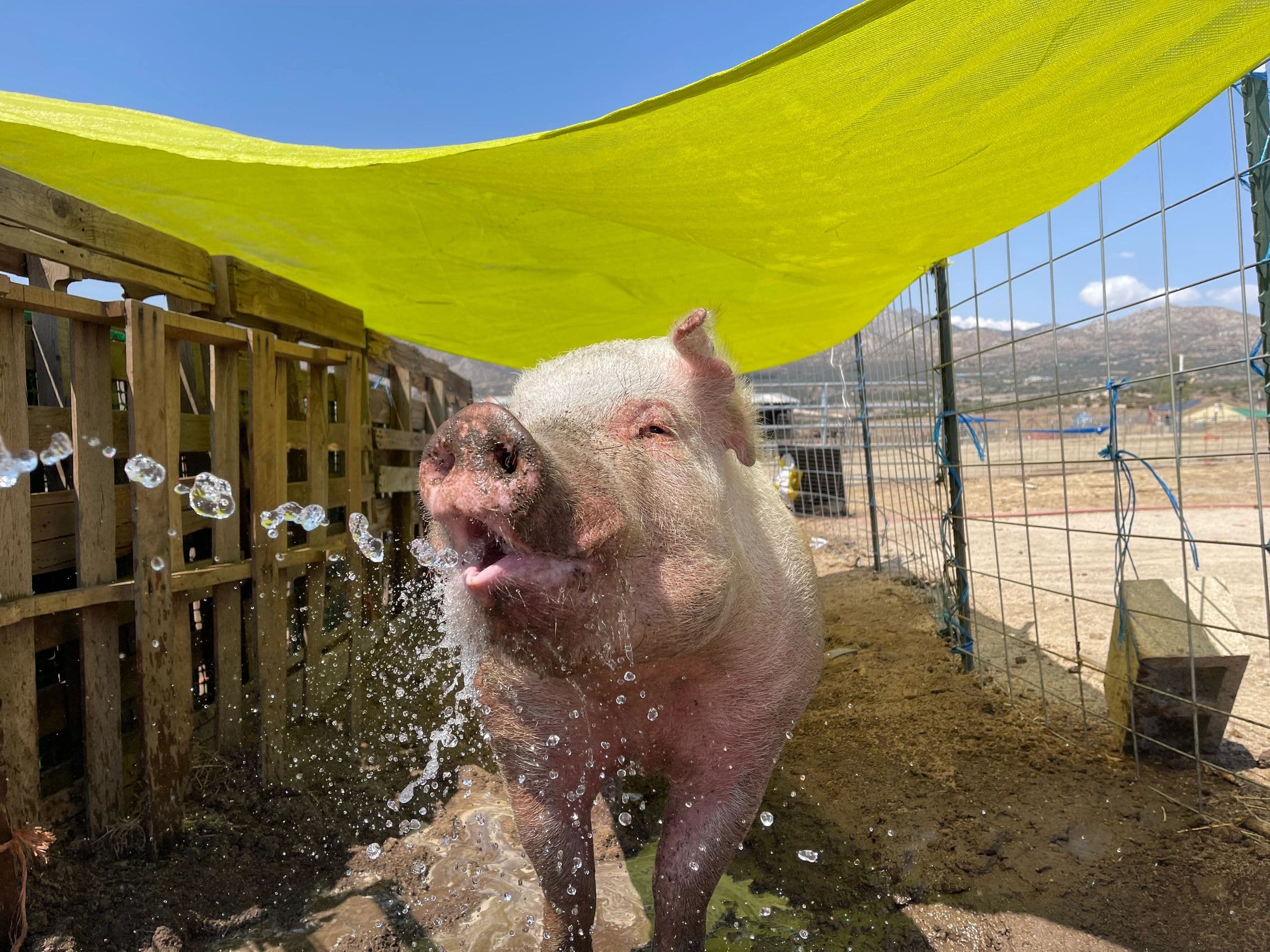
Eeyore, the very large pot belly pig (with the even larger talent for moping and whining), is a master of shade and mud. On hot days, he wallows in the mud with sheer delight. The mud acts as a natural coolant, evaporating slowly and drawing the heat away from his thick skin. It's also his sunscreen, protecting him from the harsh rays of the sun.
Eeyore's favorite spot is under the big chinaberry tree, where the mud is thick and cool. He rolls and snorts, covering himself completely. As the mud dries, it forms a crust that continues to cool him long after he's left his wallow. Eeyore's joy is palpable, his eyes half-closed in bliss as he enjoys his natural cooling system.
Salty, Bert, and Ernie — The Cool Crew
Salty, the desert-painted sheep, along with his friends Bert and Ernie, the American Black Belly Sheep, know how to keep their cool. Their wool, thick and insulating, traps a layer of cooler air close to their skin, protecting them from the sun's intense heat. They slow their digestion in the summer, producing less internal heat.
These three friends have a favorite pastime: butting the giant tree stump in the middle of their micro-pasture. This activity not only keeps them entertained but also helps release pent-up energy without overheating. As they butt and play, they find shade and cool earth to rest on, using every part of their environment to stay comfortable.
Tierra and Erick — The Cool Keepers
Tierra and Erick, the devoted farmhands, work tirelessly to keep Steampunk Farms running smoothly. Erick wears a quick-dry shirt that he keeps damp, acting as a walking swamp cooler. Tierra, with her broad-brimmed hat and drenched sport rag, creates a personal cooling system that keeps her comfortable as she works.
Their clothing choices are deliberate: light, breathable fabrics that cover their skin from the sun while allowing air to circulate. Together, they use every trick in the book to stay cool, ensuring they can care for the animals and keep the sanctuary thriving.
Keeping Cool — A Sustainable Approach
At Steampunk Farms, we take extra care of our senior and heat-sensitive chickens and turkeys. They spend their hottest days inside a specially designed house, where we use a single swamp cooler to create a wind circuit. This system ensures that the coolest air reaches them first, while the warmer air is cycled back to be cooled again. The thick stucco walls, tile roof, and proper attic venting of our desert house use passive heat management to keep temperatures stable year-round.
Every animal here teaches us something about working with nature instead of against it. Mud baths, horn radiators, wool insulation, dust baths — millions of years of evolution packed into daily routines. The best cooling technology might already be walking around our pastures.