The auction stamped her "no sale."
Stamped 'no sale' and left for dead, a pig named Zipper arrived too dehydrated for an IV — then slowly remembered how to be herself.
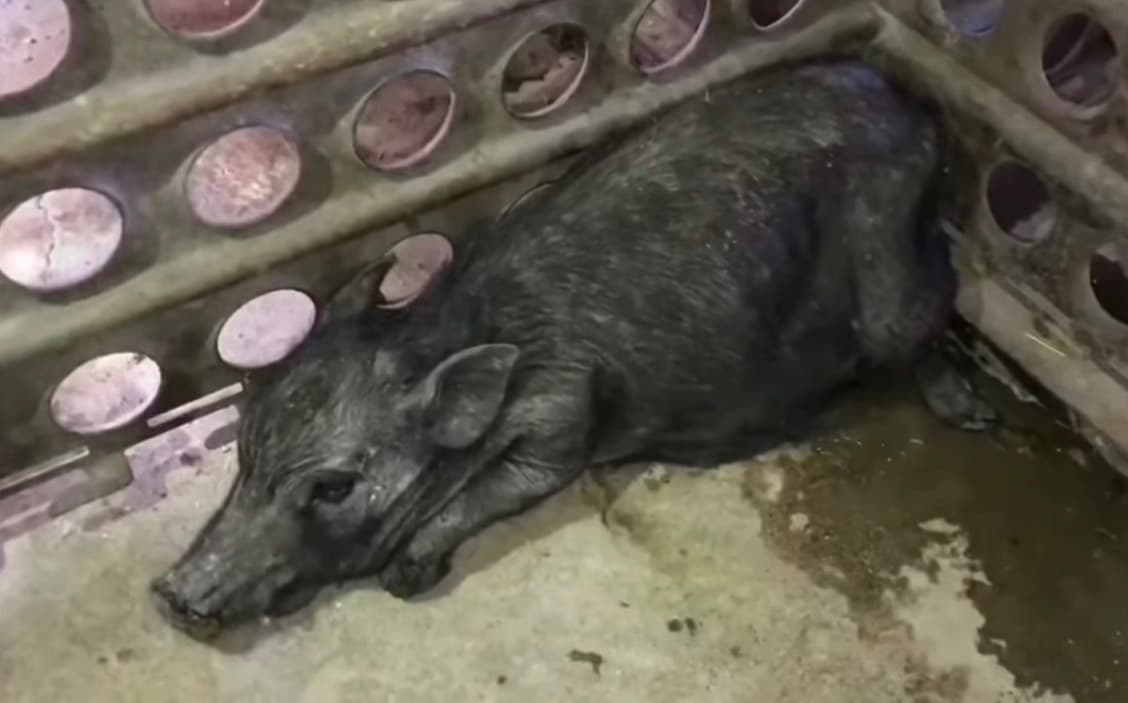
The auction stamped her "no sale."
In factory-farm language, that's a specific word: downer. An animal too sick or too broken to walk to slaughter. It's the industry's word for the failed product at the end of the assembly line — and the assembly line is the whole story.
A piglet is born into a metal crate her mother can't turn around in. Weaned at three weeks instead of three months because the next litter is already on the calendar. Crowded onto a slatted concrete floor she'll never leave, breathing ammonia thick enough to scar her lungs. Fed antibiotics not to cure her — to keep her alive long enough in conditions no animal can stay healthy in. Pushed by feed and genetics to grow faster than her own bones can carry her.
Most make it to the truck. Some don't. The ones who don't are the downers — collapsed from heat, lameness, infection, or a heart that gave out under the weight of an unnatural body. Industry policy says they're not supposed to enter the food supply. In practice, plenty do. The rest get dragged off, shot, dumped.
Then the pipeline keeps going — into us.
FDA's December report: U.S. livestock antibiotic sales jumped 16% in a single year — the biggest one-year rise in the decade they've tracked it. Pigs alone consumed 43% of all medically important antibiotics sold. Fluoroquinolones — a class critical to human medicine — spiked 49% in pig production. That's not a farming statistic. That's a public health forecast. The same pharmaceutical companies that sell antibiotics to the feedlot will sell the resistant-infection treatments, the statins, the insulin, and the chemotherapy to the people who eat what the feedlot produces. The loop closes around all of us.
This is not the farming our grandparents did. It got measurably crueler in our lifetime — by metrics the industry itself publishes — because cruelty is what scale demands when an animal is reclassified as a unit.
Zipper was a unit when she got to us.
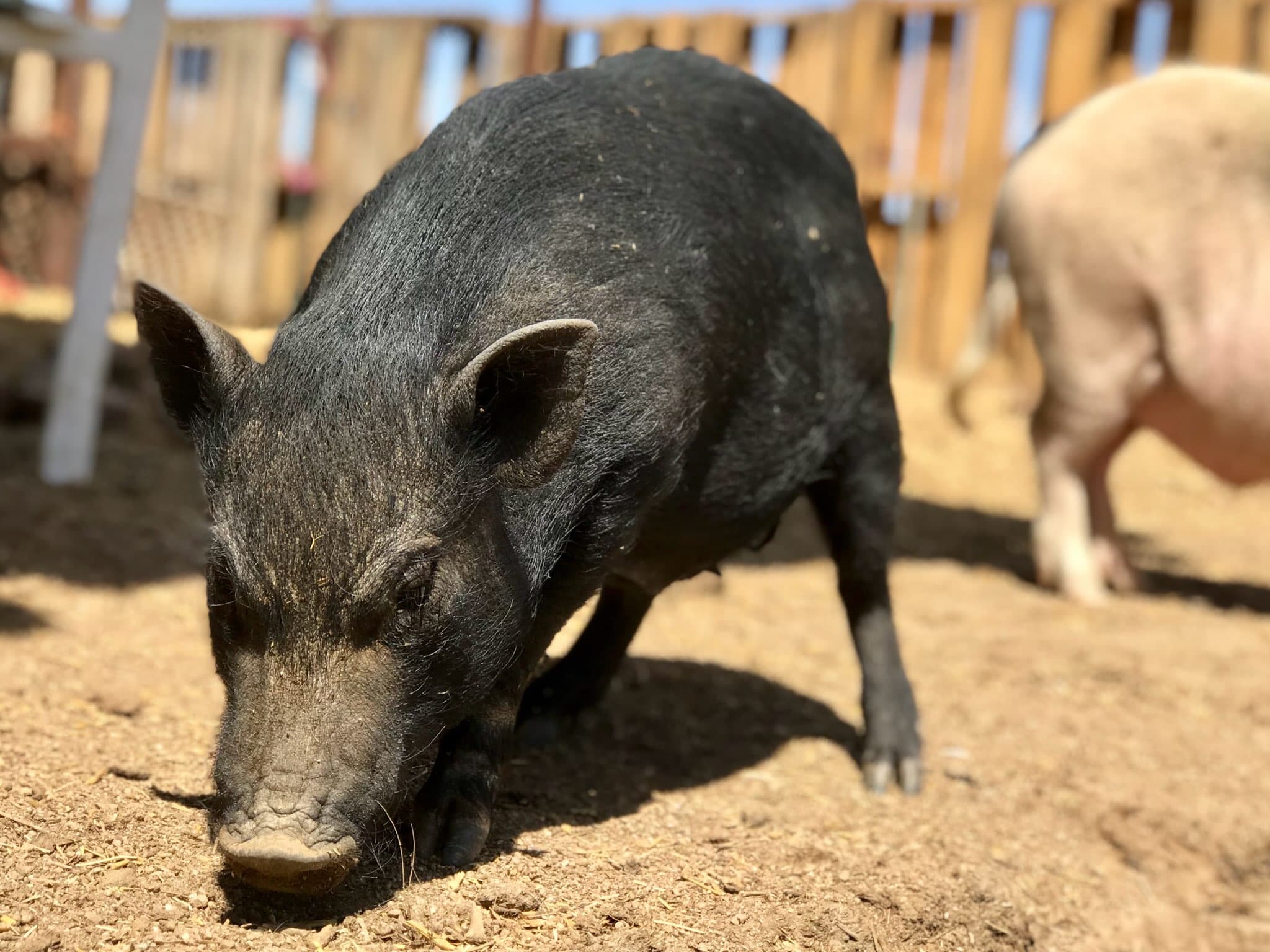
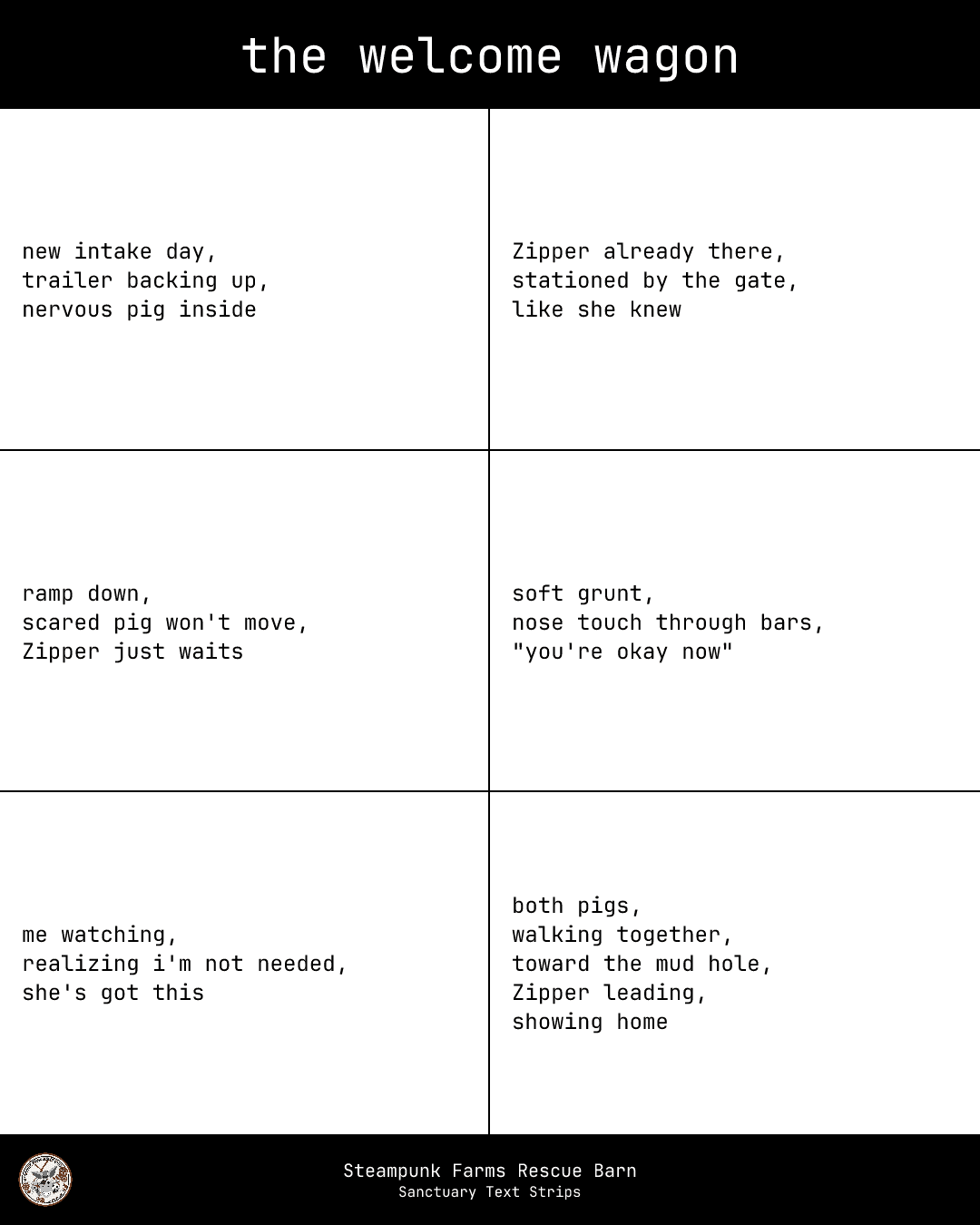
The vet couldn't even start an IV — she was too dehydrated. We went home with subcutaneous fluids and not much hope. Day three, she lifted her snout toward our voices. Day seven, she sat up for scrambled eggs. Day eighteen, we caught her rooting in the dirt — that perfect, joyful, intended pig behavior the system erases by design. Her tail uncurled from the spiral of stress.
She remembered who she was.
That's the part the system can't account for: there was always a someone in there. The auction didn't see it. The feed conversion ratio didn't see it. The shrink-wrap label didn't see it. We saw it because we stopped to look — and because Zipper, stubborn the way pigs are stubborn, refused to disappear.
You don't have to be vegan to think this pipeline has gone too far. You don't have to swear off bacon tomorrow to agree that an animal too broken to stand is the symptom of a system that broke her.
Three things, today:
🐖 Share this post. Most people have never been told what downer means. Tell them.
🐖 Eat one fewer factory-farmed meal this week. Not zero. One. Demand shapes supply.
🐖 Support a sanctuary. Steampunk Farms exists because "no sale" isn't supposed to be the last word on a life.
The industry sees a downer. We see Zipper.
Start there.